Money Talk With Tiff
ExplorePodcast overview and latest content
EpisodesBrowse the full episode archive
TopicsDiscover episodes by category
PostsBrowse published articles & write-ups
Preorder the book
Main Site

Podcast

  • Explore
  • Episodes
  • Topics
  • Posts

Topics

  • Personal Finance
  • Budgeting
  • Entrepreneurship
  • Financial Education
  • Financial Planning
  • Money Mindset
  • Financial Literacy
  • Debt Payoff

Recent Episodes

  • My Podcast Numbers Are Dropping — Here's the Real Reason
  • What I Learned From Breaking Down a Whole Chicken (And Why It Matters for Your Money)
  • Too Busy for Budgeting? 3 Money Habits That Survive Chaos
  • Your Stewardship Circle: 4 People Who Keep You Growing Financially
  • The Recovery Plan: What to Do When You Miss Your Money Goals

Links

  • Apple Podcasts
  • Spotify
  • YouTube
  • Overcast
  • Amazon Music
  • Preorder the book
  • Main Site

About

Money Talk With Tiff

Money Talk With Tiff

    Money Talk With Tiff
    Episode•June 4, 2020•54 min

    The Black Dollar, Racial Equity, and Financial Healing with Eugenie George | Ep. 41

    This special episode, originally broadcast live on Facebook, dives deep into the intersections of race, systemic financial barriers, and solutions for economic empowerment in communities of color. Tiffany welcomes back Eugenie George—author of “Our Money Stories: A No BS Guide to Financial Wellness”—to discuss the impact of ancestral trauma, the historic and ongoing “Black Tax,” and practical steps for building collective financial strength. Check out the full show notes: https://moneytalkwitht.com/podcast-show-notes/the-black-dollar/ Key Topics Covered Ancestral Trauma & Money Eugenie explains the concept of ancestral trauma and how our family histories (across all communities of color) influence current financial challenges and mentalities. The Black Tax & Systemic Barriers Tiffany and Eugenie unpack historic laws, redlining, and discriminatory policies that have created wealth gaps and continue to marginalize people of color. Implicit Bias and Segregation Personal reflections on bias in educational and financial institutions, and how outdated laws still shape cities and access to wealth today. Kwanzaa Principles for Economic Action Exploration of “Ujima” (Collective Work & Responsibility) and “Ujamaa” (Cooperative Economics) as frameworks for protest, healing, and practical financial action within the Black community. Protesting, Healing, and Self-Care Strategies for participating in movements, mental health check-ins, and the importance of dealing with personal and community trauma. Action Steps for ListenersEducate yourself about local history, systemic barriers, and your own money story. Find financial advisors and resources that reflect diverse communities. Support Black-owned and minority-owned businesses as a form of collective economic empowerment. Use your voice and purchasing power to demand change within institutions. Resources & Recommendations Eugenie's book: https://amzn.to/2MtbT0g Books: “The Color of Law,” “White Fragility,” “The Color of Wealth,” “The Color of Money” Documentaries: “Segregated by Design,” “Explained: The Racial Wealth Gap” Podcasts and blogs like Money Talk with Tiff Connect with Tiffany on social media at @moneytalkwitht everywhere you are!

    Apple PodcastsSpotifyYouTubeOvercastAmazon Music

    Key Takeaways

    • 1

      Ancestral trauma shapes current financial behaviors across communities of color

      Eugenie's research on Holocaust survivors and epigenetics led her to explore how family histories influence money mindsets

      Interviewed 40 women of color about their money stories to trace how historical laws affect long-term financial outcomes

      The concept applies beyond Black Americans to Latinx, Native American, and Asian American communities

    • 2

      The 'Black Tax' represents ongoing systemic discrimination affecting wealth building

      Discrimination manifests in health, interactions, microaggressions, and creates long-term effects on money and mental health

      Historic policies like redlining, land seizure acts, and immigration laws continue to marginalize communities today

      Segregation patterns from the 1800s-1960s still shape city demographics and wealth access

    • 3

      Kwanzaa principles offer frameworks for collective economic action and healing

      Ujima (Collective Work & Responsibility) emphasizes community support and checking in on mental health during trauma

      Ujamaa (Cooperative Economics) advocates using purchasing power to support Black-owned and minority-owned businesses

      Self-care and inner work must precede outward action—journaling, meditation, and processing trauma are essential

    • 4

      The financial industry perpetuates racial barriers through implicit bias and exclusion

      People of color must be 'overly qualified' to enter finance spaces dominated by older white males

      Microaggressions and stereotypes create hostile environments; professionals report changing appearance and names to fit in

      Finding advisors who understand allyship and reflect diverse communities is critical for financial wellness

    Intro

    • This special live Facebook episode explores the intersections of race, systemic financial barriers, and economic empowerment in communities of color, featuring returning guest Eugenie George discussing ancestral trauma, the Black Tax, and practical steps for building collective financial strength.
    • Eugenie George is the author of 'Our Money Stories: A No BS Guide to Financial Wellness' and an expert on how ancestral trauma affects financial behaviors across communities of color. She has interviewed dozens of women about their money stories and researched historical laws impacting wealth building.
    Eugenie's BookEugenie's Website

    – Defining Ancestral Trauma and Its Financial Impact

    • Eugenie explains ancestral trauma as problems or stressors today that stem from family history. Her research journey began with a podcast on Holocaust survivors and epigenetics, leading her to interview 40 women of color about their money stories and trace how laws affect long-term financial outcomes.

    Basically it means that the problems or the things that you're stressed about now may be because of your family's history.

    – Eugenie George

    – The Black Tax and Systemic Barriers

    • Tiffany and Eugenie discuss how discriminatory policies create ongoing marginalization. Eugenie defines the Black Tax as discrimination that plays out in health, interactions, microaggressions, and creates long-term effects on money and mental health. They reference the documentary 'Segregated by Design' and historic laws like the 1865 land seizure act.

    Depending on who you are, you're going to be discriminated against wherever you go... If you don't feel comfortable with even learning about money, you're already disbarred.

    – Eugenie George

    – Kwanzaa Principles: Ujima and Collective Responsibility

    • Tiffany introduces Ujima (Collective Work & Responsibility) as a framework for current protests and community action. Eugenie emphasizes checking in on mental health, recognizing childhood trauma, and doing inner work before outward activism. She recommends the CDC/Kaiser adverse childhood experiences research and the book 'Peace in Every Step.'

    You have to do a lot of inner work first before you can just always go out... We are wounded folks and we are now just coming to awareness of it.

    – Eugenie George

    – Ujamaa: Cooperative Economics and the Black Dollar

    • Tiffany and Eugenie explore Ujamaa (Cooperative Economics) as the path forward. Eugenie breaks down how immigration policies, Black Wall Street destruction, citizenship barriers, and redlining have affected different communities of color. They discuss using purchasing power to support businesses that align with community values.

    If we are trying to change and we're trying to move into a new millennial, we need to shout a lot of stuff before we can do any of the work.

    – Eugenie George

    – Navigating the Financial Industry as a Person of Color

    • Both hosts share experiences of being 'overly qualified' to enter finance spaces. Eugenie changed her hair and used her middle name for job applications. Tiffany refused to change her natural hair or remove cultural markers. They stress finding financial advisors who understand allyship and reflect diverse communities.

    The hardest thing about navigating the financial industry is really being sure of yourself... If they understand [allyship], then I will work with them. If they don't, then that means I have to do extra work.

    – Eugenie George

    – Healing, Self-Care, and Moving Forward

    • Eugenie and Tiffany emphasize protecting mental health during this time of awakening. Eugenie recommends journaling, meditation, and processing trauma. Tiffany describes sleeping for an entire day after protesting and taking social media breaks. They stress that this moment requires sustained action, not temporary engagement.

    Hurt people hurt people... It's time for us to kind of like bring back and check in with ourselves first before we can do anything else.

    – Eugenie George

    Books Mentioned

    • Our Money Stories: A No BS Guide to Financial Wellness by Eugenie George
    • The Color of Law by Richard Rothstein
    • White Fragility by Robin DiAngelo
    • The Color of Wealth by Multiple Authors
    • The Color of Money by Multiple Authors
    • Peace in Every Step by Thich Nhat Hanh

    Resources

    • Segregated by Designvideo
    • Explained: The Racial Wealth Gapvideo
    • Money Talk with Tiff Podcast

    Topics

    Ancestral TraumaRacial Wealth GapBlack TaxSystemic RacismFinancial WellnessKwanzaa PrinciplesCooperative EconomicsImplicit BiasFinancial IndustryCommunity Healing

    The Black Dollar, Racial Equity, and Financial Healing with Eugenie George | Ep. 41

    0:00
    0:00

    Related Episodes

    Understanding the Four Pillars of Wealth with Ray'Chel Wilson | Ep. 340

    Understanding the Four Pillars of Wealth with Ray'Chel Wilson | Ep. 340

    Sep 26, 202411 min
    Ray'Chel WilsonstewardshipBlack Wealth Freedom series
    Ruthie Thee Truth Guides Dads and Grads to Financial Wellness | Ep. 329

    Ruthie Thee Truth Guides Dads and Grads to Financial Wellness | Ep. 329

    Aug 1, 202428 min
    Ruthie Thee Truthfinancial wellnessmental health
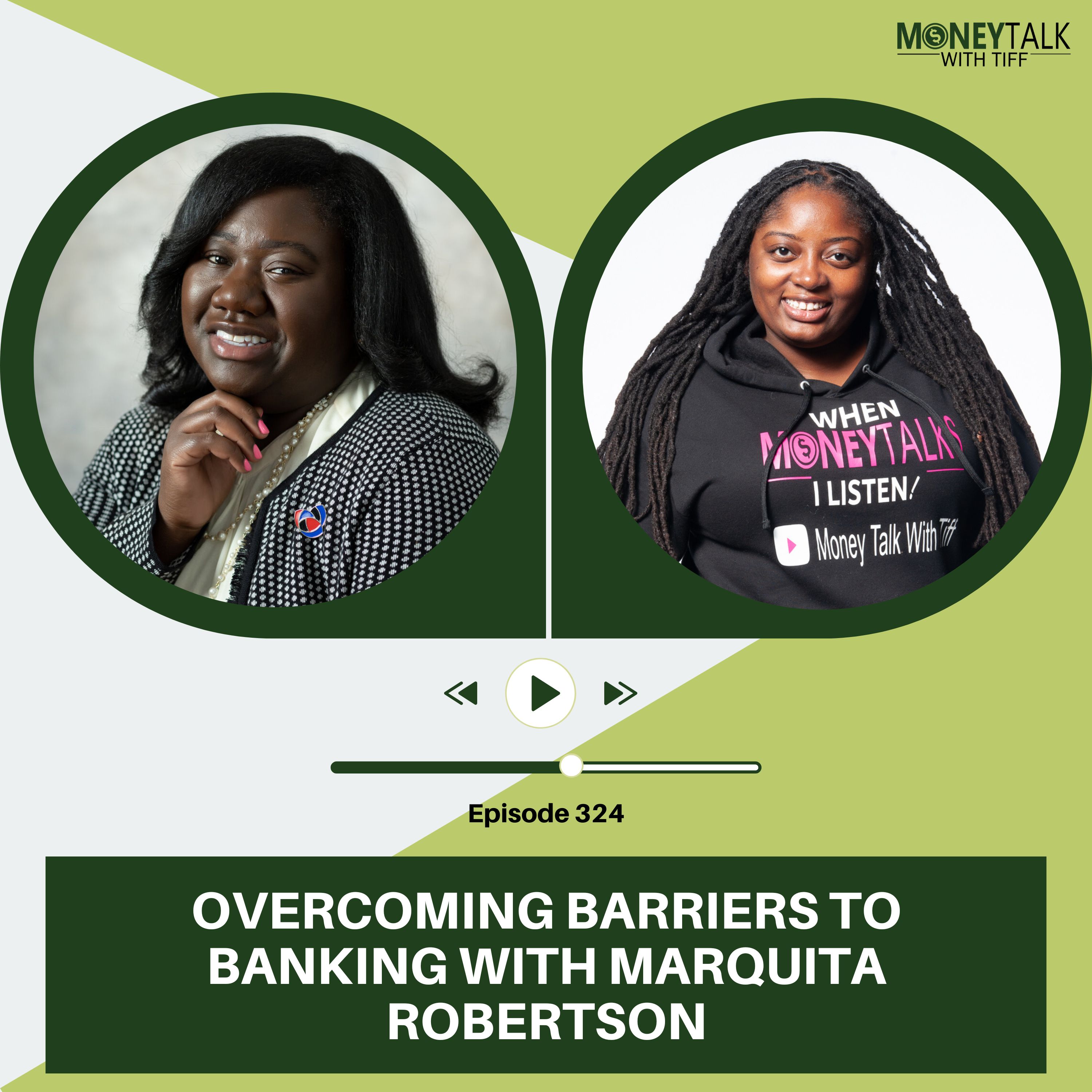
    Overcoming Barriers to Banking with Marquita Robertson | Ep. 324

    Overcoming Barriers to Banking with Marquita Robertson | Ep. 324

    Jun 6, 202420 min
    Marquita Robertsonunbankedunderbanked
    Why You Shouldn't Rush Into Full-Time Entrepreneurship | Ep. 275

    Why You Shouldn't Rush Into Full-Time Entrepreneurship | Ep. 275

    Oct 31, 202314 min
    entrepreneurshipfull-time jobside hustle